← Back
Caribou in Crisis: How Scalable Herd Management can Reverse the Trend
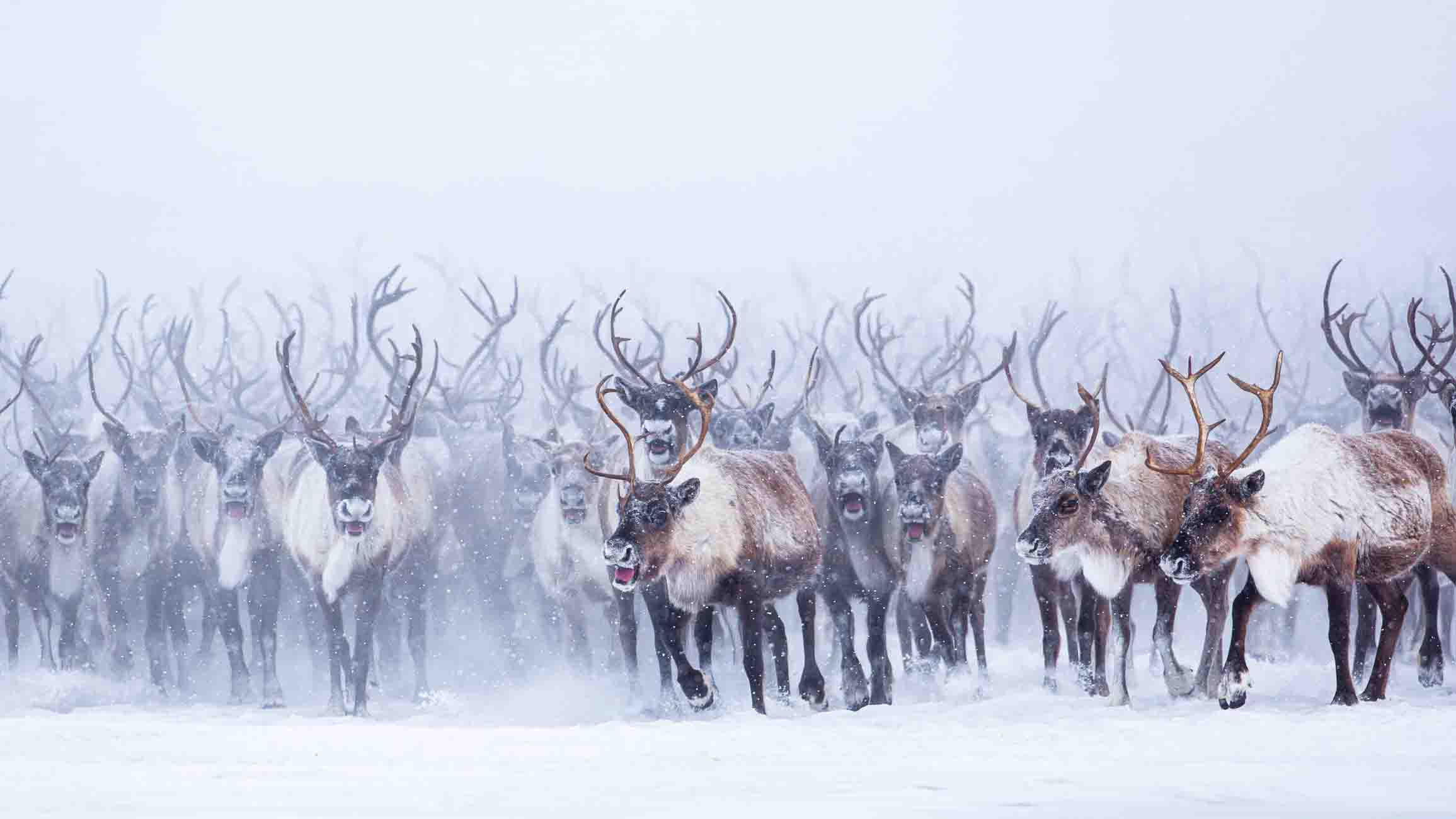
High in Canada’s northern landscapes, a lone caribou picks its way across a patchwork of forest and snow. To the untrained eye, the scene seems timeless, a reminder of the wild expanses the species has symbolized for generations. Yet this landscape is changing faster than the caribou can adapt. Their numbers are falling across nearly every province, making this once-abundant species one of the country’s most concerning conservation cases.
For more than 40 years, our teams have supported wildlife experts, Indigenous communities, governments, and conservation partners by tracking animals across some of the planet’s most remote territories. That experience, built over decades of monitoring species from elephants to seabirds, now informs a new generation of scalable herd management tools, using satellite technology, designed to meet the urgency and complexity of the caribou crisis.
Three Types of Caribou, One Shared Decline
Caribou are not a single species with a single set of challenges. Instead, they form a rich mosaic of ecotypes, each tightly connected to its environment. Boreal caribou depend on large, undisturbed forests to avoid predators and raise their young. Mountain caribou, living among steep alpine slopes, rely on deep snowpacks and old-growth forests that are vanishing as climate patterns shift. Migratory tundra caribou undertake epic journeys of thousands of kilometers, moving across seasonal ranges that must remain connected and intact to support them.
How Different Ecotypes Respond to Environmental Pressures
Despite their differences, all three ecotypes share a similar trajectory: shrinking habitat, disrupted seasonal rhythms, and increased exposure to disturbances. Their decline is not the result of a single pressure but of multiple stressors converging faster than evolutionary adaptation allows.

A Web of Pressures Reshaping Caribou Survival
Few species are as sensitive to habitat fragmentation as caribou. Roads, seismic lines, pipelines, and clearings split the forest into smaller pieces. Even narrow linear features can increase predator access, interrupt migration pathways, and limit the quiet space caribou need during calving.
Environment and Climate Change Canada’s national recovery strategy highlights habitat fragmentation and cumulative industrial disturbances as the primary drivers of decline in woodland caribou herds.
The Hidden Impacts of Resource Extraction and Human Activity
Mining, oil and gas operations, and industrial forestry reshape entire ecosystems. These activities don’t just reduce habitat, they change behaviour. Caribou may avoid prime feeding grounds, extend migration routes, or alter calving locations to escape noise and activity. Over time, such displacement can weaken herd resilience.
How Climate Change and Wildfires Accelerate Caribou Decline
Climate change adds complexity. Warming temperatures influence vegetation composition, snow and ice conditions, and the timing of spring melt, all critical for caribou survival. Meanwhile, increasingly intense wildfires can turn old forests into young, less suitable habitats for decades. As ecosystems restructure, caribou are left with fewer safe places to go.
The Monitoring Gap: Why Traditional Tracking Is No Longer Enough
For decades, researchers relied on monitoring only a handful of animals from each herd. This approach provided valuable insights but left major gaps. Small sample sizes mean rare behaviours go undocumented, early warning signals are missed, and management actions may be based on incomplete information.
Why Wildlife Managers Need Data at Herd Scale
Caribou decline plays out across vast territories. It is now clear that understanding how herds respond to habitat loss, climate shifts, or new infrastructure requires data that captures diversity within the herd, not just the average trend. Scaling from dozens of collars to hundreds transforms insight into strategy, offering a statistically robust, real-time understanding of population dynamics.
A Turning Point: Tracking Hundreds of Caribou in Real Time
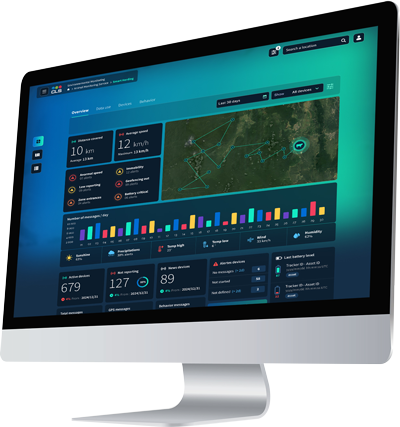
A major shift is underway. Modern satellite collars now make it possible to track hundreds of caribou simultaneously, offering detailed movement data multiple times per day. These lightweight devices provide multi-year coverage across large regions, revealing migration routes, calving sites, feeding patterns, and responses to disturbances with unprecedented clarity.
How Satellite Collars Improve Wildlife Monitoring
Beyond simple positioning, today’s collars help detect subtle changes: slower movement after a disturbance, altered group cohesion during calving, or sudden displacement after a wildfire. These behavioural signals allow managers to intervene earlier and more effectively.
Using Earth Observation to Map Habitat Change and Migration Paths
Satellite imagery adds a crucial layer of environmental intelligence. Earth Observation (EO) reveals vegetation change, snow cover, fire scars, freeze-thaw cycles, and expanding networks of linear disturbances. It allows conservation teams to see both where caribou move and why they move.
When telemetry and EO data come together, the result is a full ecosystem perspective. This integrated approach supports predictive models, identifies high-risk areas, and informs cross-regional land-use planning, all essential in landscapes that change faster than caribou can adapt.
From Wildlife Tracking to Scalable Herd Management
Our decades of experience tracking wildlife across challenging environments, from Arctic predators to threatened species in tropical forests, has shown us that conservation succeeds when data is both accurate and abundant. This insight now drives the development of modern herd management platforms that combine animal telemetry, environmental intelligence, and intuitive visualization to match the urgency of the caribou crisis.
Why Scalable Data-Driven Herd Management Matters
Data-driven approaches provide clarity in moments of uncertainty. Real-time herd data can alert managers when calving sites shift, when habitat pressures intensify, or when migration timing changes. It also helps evaluate policy impacts, plan protected areas, and measure the success of restoration projects.
Large-scale monitoring enables the detection of early warning signals, unusual movements, sudden dispersal, prolonged immobility, that can indicate threats such as predation, habitat disturbance, or weather extremes. This supports rapid, informed decision-making that protects vulnerable animals.
Effective caribou conservation requires collaboration. Scalable herd management supports federal and provincial agencies, Indigenous guardianship programs, local communities, and conservation NGOs by offering reliable, accessible, and actionable data. It empowers co-stewardship approaches and helps protect species with deep cultural significance.
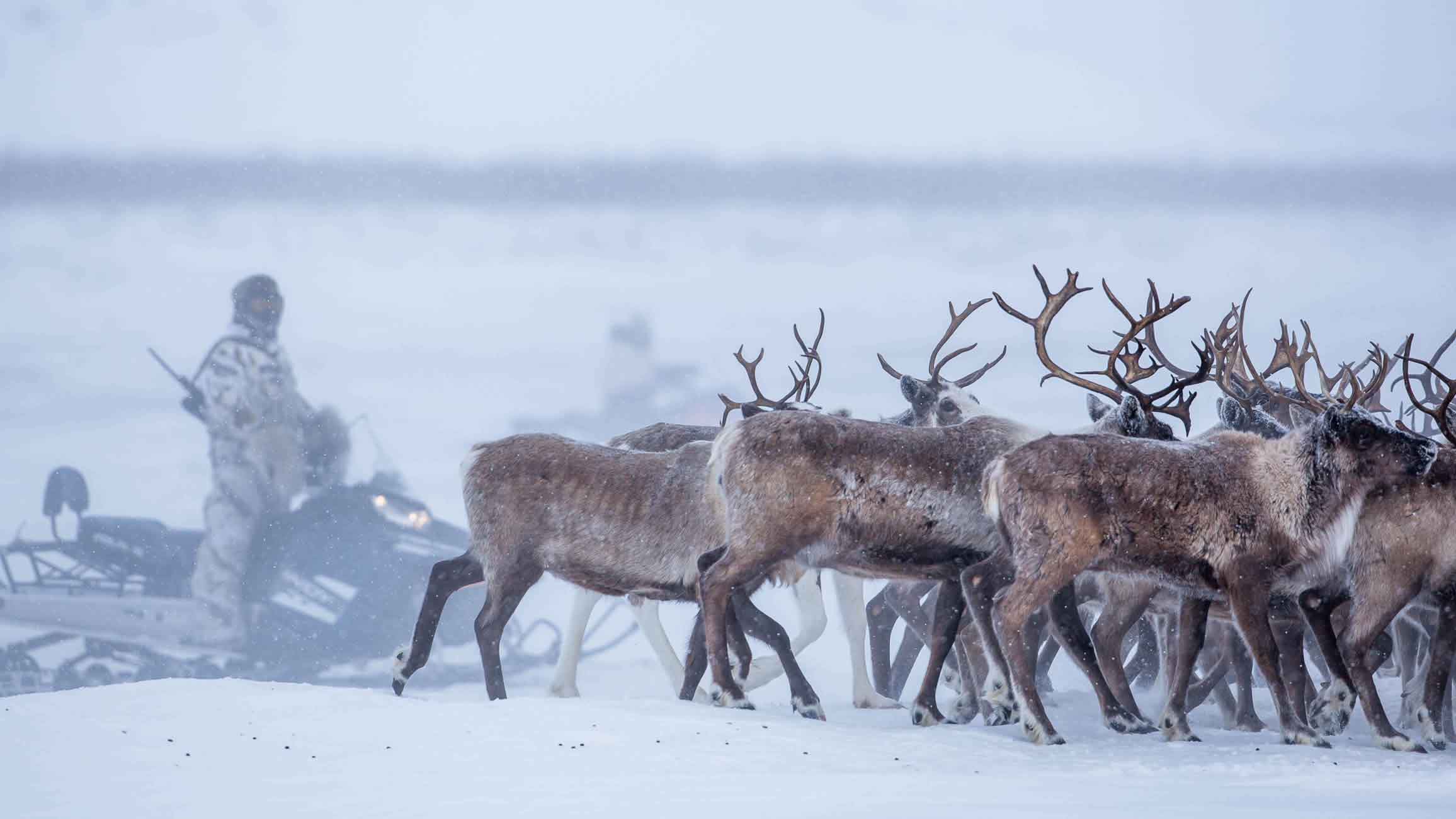
Copyright Nicolas Dory
A Future Still Within Reach
Caribou are remarkably resilient when given space, time, and informed support. With scalable monitoring, decision-makers can identify early signs of stress, anticipate environmental threats, and implement targeted actions that genuinely help herds recover.
The convergence of satellite-based tracking, Earth Observation, and 40 years of wildlife expertise marks a turning point. While the challenges facing caribou are significant, the tools now exist to match the scale of the threat, and to ensure that these emblematic animals continue roaming Canada’s northern landscapes for generations to come.