← Back
Balancing the Herd: Why Camel Population Management Needs Policy and Technology
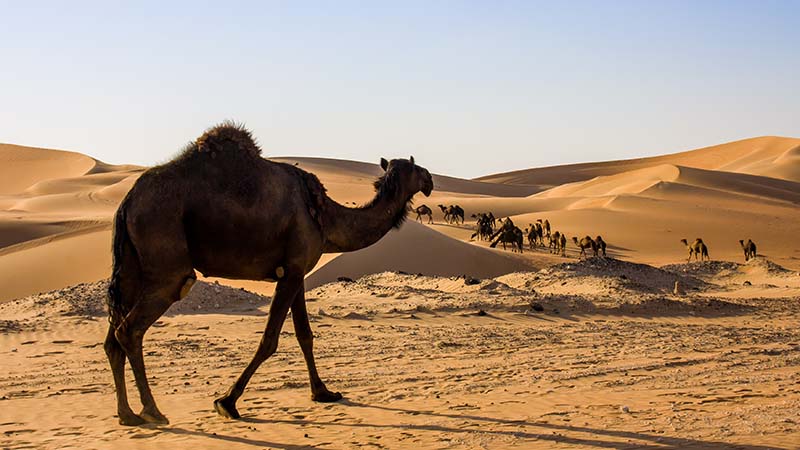
Camel populations are steadily increasing across the Middle East, reflecting their growing importance in the cultural heritage, economy, food security and climate-resilient livestock systems. According to the FAO, there are now more than 41 million camels globally, with numbers rising over the past decades as demand for camel-based products expands.
In countries like Saudi Arabia alone, the herd has reached over 2.2 million animals, illustrating the scale that camel systems have now reached.
Yet this growth is not always matched by modern management tools. In many parts of the region, camel herd management remains governed by fragmented regulations, often rooted in traditional practices.
As herds expand and movements become harder to anticipate, a gap is emerging between population dynamics and governance capacity. This is precisely where modern solutions, such as the Argos Herd Management solution, combining tracking and environmental data, are beginning to play a critical role, helping bridge the divide.
When Growth Outpaces Management
The consequences of this regulatory gap are already visible.
In some rangelands, grazing pressure is becoming increasingly concentrated around settlements and water sources. While camels are highly adapted to desert environments, ecosystems still have limits. Overgrazing is now recognized as a major threat in parts of the Arabian Desert, where livestock pressure contributes to vegetation degradation and ecosystem stress.
But environmental pressure is not the only challenge.
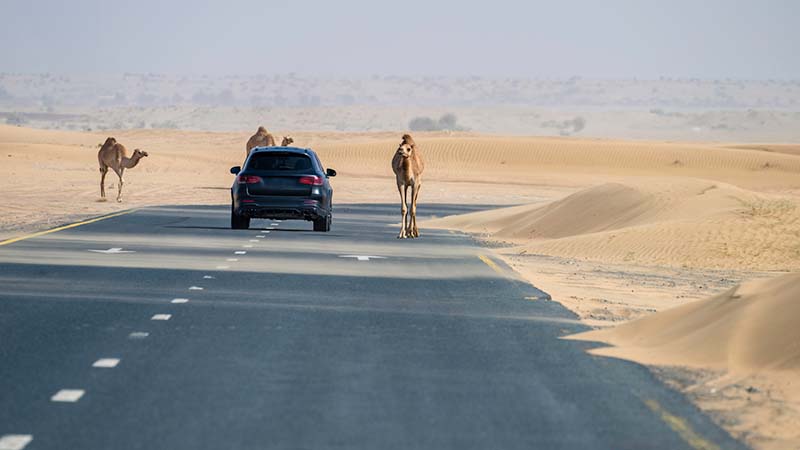
Road safety has become a major issue linked to unmanaged camel populations. In countries like Saudi Arabia, stray camels regularly cross highways, creating serious risks for motorists. Vehicle-camel collisions are a persistent problem, sometimes resulting in severe injuries to fatalities and prompting authorities to strengthen regulations and enforcement.
In response, Saudi authorities have introduced measures such as mandatory camel registration to reduce accidents.
These initiatives highlight a critical point, that unmanaged herd movement is not only an environmental issue but also a public safety concern.
Mobility adds another layer of complexity. Camels can travel vast distances, often crossing borders where monitoring is limited. This creates challenges for disease control, land-use enforcement, and ownership tracking, especially in regions where governance systems stop at national boundaries, but herds do not.
The Need for Stronger Camel Management Policies
To respond to these challenges, countries are beginning to move toward more structured approaches to camel herd management.
The first step is spatial: defining where grazing is sustainable and where it must be limited. In environments where vegetation regeneration is slow, zoning and controlled access to rangelands become essential to avoid long-term degradation.
Equally important is the ability to identify and quantify herds. Tagging and registering camels, allows authorities to better understand population size, distribution, and ownership.
Finally, movement needs to be better understood, particularly in cross-border regions. Without coordination between neighboring countries, efforts to regulate grazing or prevent disease transmission remain incomplete.
What is emerging is a clear need for coherent national policies supported by regional cooperation, capable of managing camel systems at the scale at which they now operate.
How Earth Observation and Satellite Tracking Support Enforcement
Implementing these policies across vast desert landscapes remains a challenge. This is where Earth Observation (EO) and satellite tracking technologies provide a decisive advantage.
Satellite data enables continuous monitoring of rangeland conditions, helping detect vegetation stress, assess grazing pressure, and identify areas at risk of degradation. This allows authorities to base decisions on real environmental conditions.
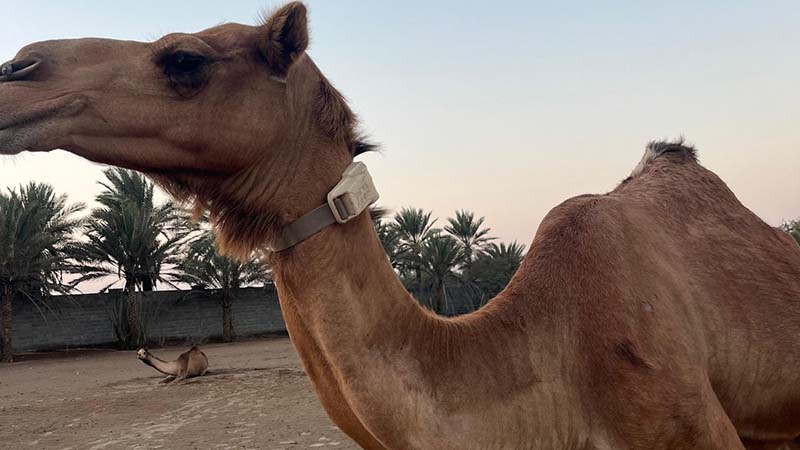
At the same time, satellite-connected tracking devices, like the CLS collar, provide visibility on herd movements in near real time. Authorities can detect entry into restricted zones, prevent road accidents thereby improving road safety and saving lives, monitor seasonal migration patterns and better understand and regulate the grazing pressure across territories and seasons
Together, these tools transform how policies are enforced leading to proactive, data-driven management.
“In Saudi Arabia, Oman, the UAE and across the region, we are seeing a clear shift toward data-driven livestock management. Satellite tracking combined with Earth Observation allows us not only to understand where herds are, but how they interact with their environment.
With solutions like the Argos Herd Managment solution, combining cost-effective collars and reliable satellite connectivity, it is now possible to monitor thousands, even millions, of camels across vast and remote desert areas, providing the visibility needed to manage herds at a national or regional level.”
Toward Adaptive and Sustainable Camel Management
Camel populations are likely to continue growing as countries adapt to climate constraints and seek resilient livestock systems. The challenge is not to limit this growth, but to manage it sustainably.
This requires a shift toward governance models that combine:
- clear regulatory frameworks
- regional coordination
- and data-driven tools capable of operating at scale
Earth Observation and satellite tracking technologies are not a replacement for traditional knowledge, but a powerful complement to it. They provide the visibility needed to manage complexity, anticipate risks, and support more informed decisions.
In this evolving landscape, the balance of the herd will depend on one key factor: the ability to align policy, technology, and environment, before the pressure on fragile ecosystems becomes irreversible.